Search V2 - Sri Mandir
Designing a High‑Intent Discovery Engine | Product Design
Overview
Redesigned the search experience for a high‑intent spiritual platform to improve discovery, reduce dead ends, and increase transaction conversion.
The goal was to transform search from a basic keyword input into an intent‑aware discovery system.
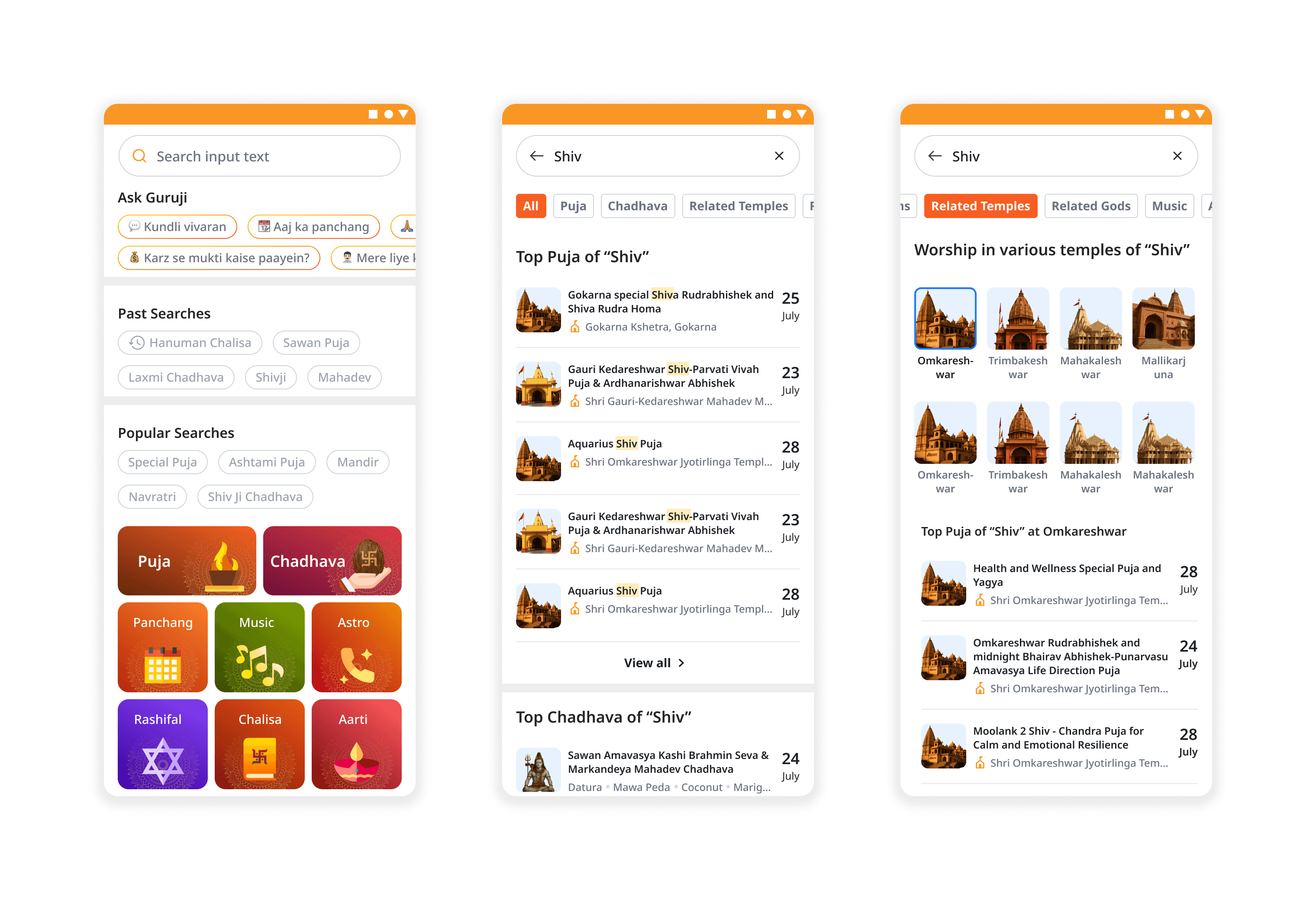
The Problem
Search was one of the platform’s highest‑intent entry points, but the experience often failed users at critical moments.
Users searching for gods, temples, rituals, festivals, or doshas frequently encountered:
Zero-result states
Weak autosuggestions
Poor result grouping
Low scanability
Repetitive transactional results

Design Goal
Create a search experience that:

The focus was to make search feel assistive rather than reactive.
From Single Results to Intent‑Based Discovery
Initially, search results primarily surfaced transactional cards like Puja and Chadhava.
This created a narrow experience where users could only interact with a limited set of content types, even when their intent was broader.
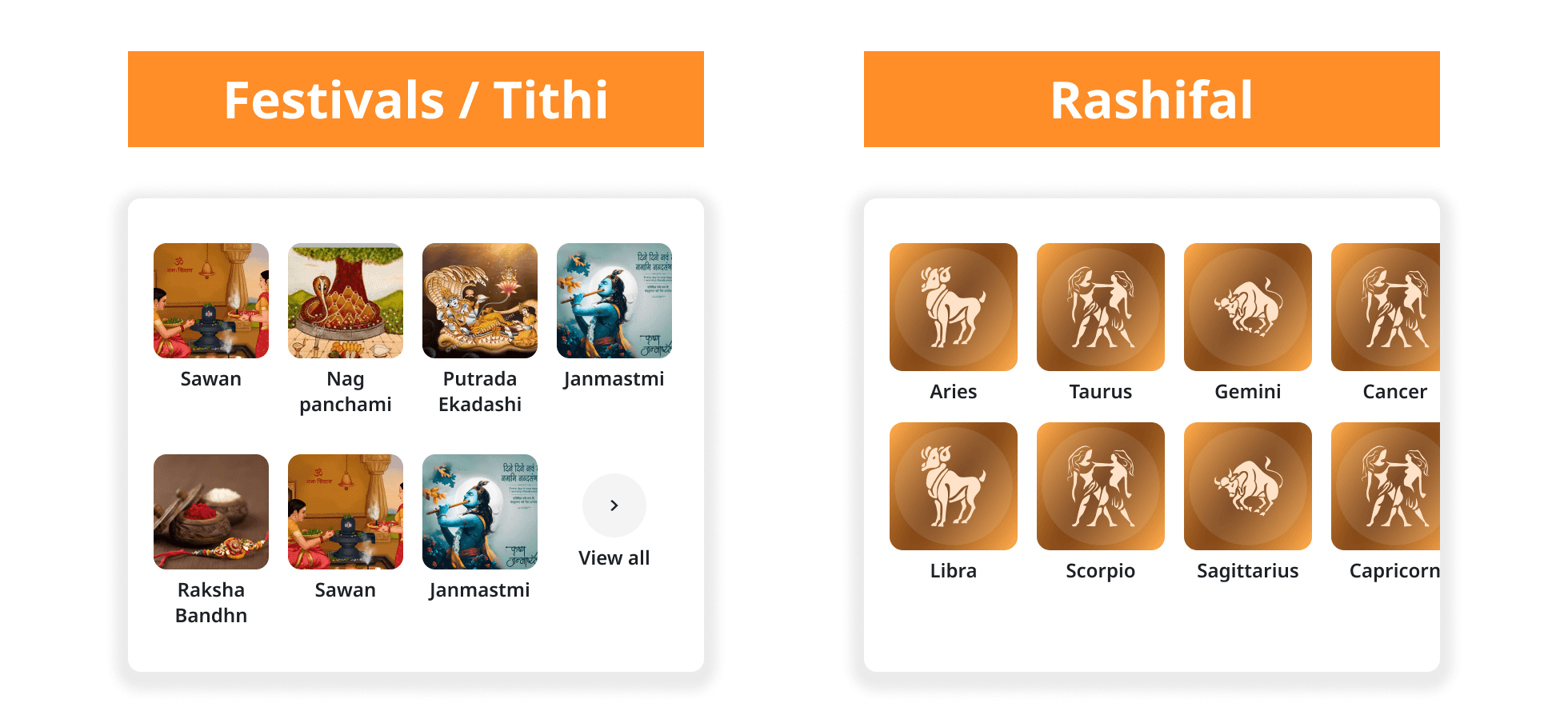
To improve discovery, the search system was redesigned to support multiple entity types and contextual sections.
The new experience introduced dedicated result formats for:


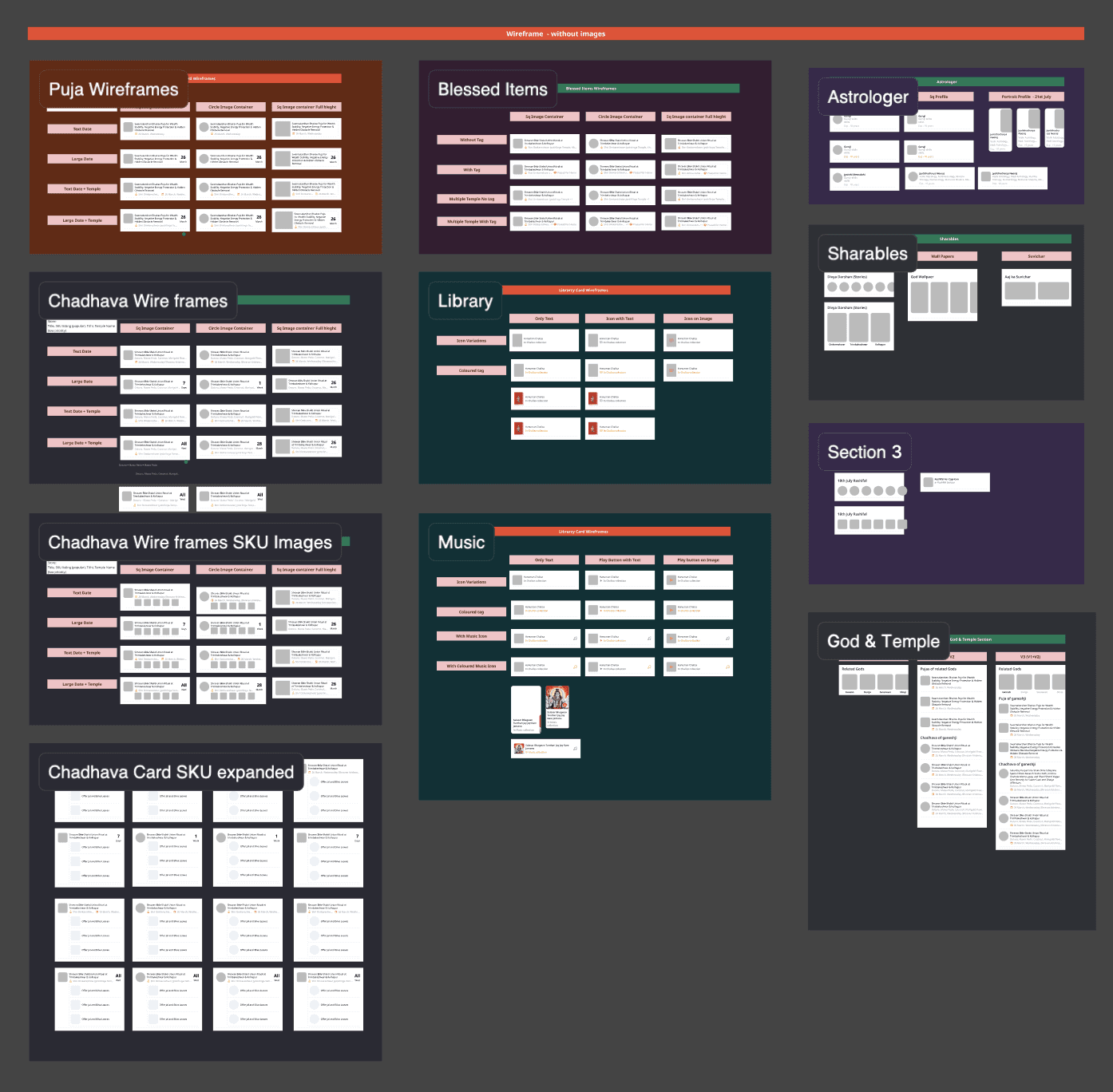
Exploration & Iteration
The focus was to help users quickly scan, understand, and discover relevant content.
Final Experience
The redesigned search experience introduced a more structured and discovery-driven flow.
Improved Result Density
Smaller cards and cleaner layouts allowed users to explore more options quickly.
Smart Fallback States
Instead of showing empty states, users were guided toward related and relevant content.


Impact
The redesign significantly improved engagement, trust, and conversion.

Learnings
This project reinforced the idea that search is not just a utility feature.
Strong UX decisions around relevance, guidance, and intent can significantly improve business outcomes.